
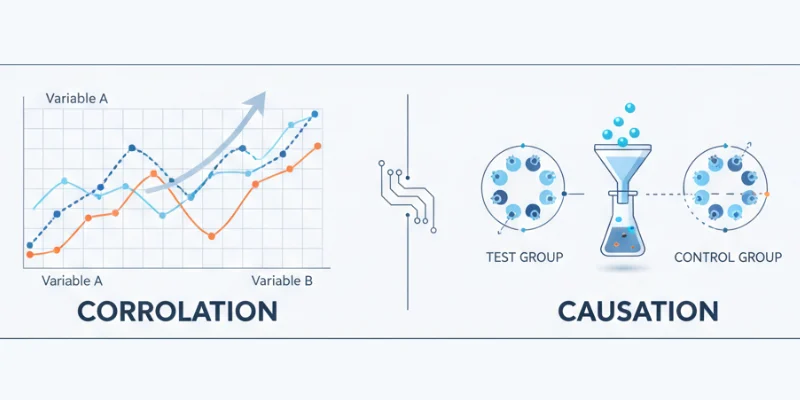
When working with data, two terms that frequently come up are correlation and causation. While they sound similar, they indicate separate ideas, and grasping the differences is essential for anyone entering the field of data science. To achieve a more profound comprehension of these ideas and additional topics, enroll in a Data Science Course in Trivandrum at FITA Academy and enhance your data analysis skills.
What is Correlation?
In simple terms, correlation refers to a relationship or pattern between two variables. When two variables have a correlation, alterations in one variable are likely to be linked with alterations in the other. Correlation is often measured using a statistic called the correlation coefficient, which quantifies the strength and direction of the relationship. The magnitude of this coefficient varies between -1 and 1, with the following interpretations:
- 1 signifies a perfect positive correlation (both variables increase together),
- -1 signifies a perfect negative correlation (as one variable increases, the other decreases),
- A value of 0 indicates that there is no correlation between the variables.
Correlation is frequently utilized in data analysis to detect trends or associations in data, but it’s crucial to recognize that such a relationship does not necessarily imply causation.
What is Causation?
Causation, on the other hand, refers to a cause-and-effect relationship between two variables. When one variable causes a change in another, it means there is a direct influence. For example, smoking causes lung cancer. This represents a causal relationship since smoking is a direct factor in elevating the risk of developing lung cancer.
In the context of data science, causation is harder to prove and typically requires more rigorous experimentation and study design. If you’re looking to dive deeper into causality and other data science concepts, consider enrolling in a Data Science Course in Kochi to develop a strong foundation in advanced data analysis techniques.
Key Differences Between Correlation and Causation
The key difference lies in the nature of the relationship. While correlation simply measures the association between two variables, causation implies that one variable is influencing the other. However, correlation alone doesn’t tell us anything about the cause behind the relationship. For instance, one might notice a connection between ice cream sales and drowning fatalities, but this does not imply that purchasing ice cream leads to drowning incidents. More likely, both variables are related to a third factor, like hot weather.
Why Correlation Does Not Imply Causation
One of the most famous expressions in statistics is “correlation does not imply causation”. This indicates that a correlation between two variables does not imply that one variable causes the other. There are several reasons why correlation might be observed without causation:
- Coincidence: Sometimes, variables can simply move in sync by chance, especially in large datasets.
- Third-Variable Problem: A third variable might be influencing both correlated variables. For example, wealth and education are correlated, but a third factor like access to resources could be the underlying cause.
- Reverse Causality: In some cases, the relationship could be the opposite of what is initially assumed. For example, it might not be that higher stress causes poor health, but that poor health leads to increased stress.
How to Establish Causality
Establishing causality in data science is a more complex task that typically requires more than just statistical analysis. While correlation can be easily calculated, causality often requires controlled experiments, such as A/B testing or randomized controlled trials (RCTs). These experiments help isolate the cause of a particular effect by controlling external factors that might influence the results. To gain hands-on experience with these techniques and more, consider joining a Data Science Course in Pune, where you’ll learn how to apply these methods effectively in real-world scenarios.
For example, in a business context, if you wanted to understand whether a new marketing campaign caused an increase in sales, an A/B test would involve comparing the sales of one group exposed to the campaign with another group that wasn’t, while controlling for other factors like seasonality.
The Importance of Understanding the Difference
Data scientists must understand the difference between correlation and causation because incorrect results might lead to poor business decisions or policy initiatives. Without distinguishing between the two, you might act on an observed pattern that is merely coincidental or caused by an unaccounted-for factor.
In the real world, most data analyses will only show correlations. Causality requires deeper, more thorough investigation and typically more advanced techniques, including experimentation, to confirm a true cause-and-effect relationship.
In data science, the ability to distinguish between correlation and causation is essential. While correlation can highlight interesting relationships between variables, it doesn’t provide evidence of cause. To draw valid conclusions, especially when making decisions based on data, you need to go beyond correlation and aim to understand causality through rigorous testing and analysis. Remember, correlation may suggest something, but causation proves it. To master this and other critical skills, sign up for a Data Science Course in Jaipur, where you’ll gain the knowledge and tools to make data-driven decisions with confidence.
Also check: How Can Data Science Enhance Marketing Strategies?